
Sitting here with Akiko, telling her about Athens, about growing up between worlds, she asks the obvious question:
"So when did you first realize reality was bigger than what you'd been taught?"
And I have to go back further. Before Mexico. Before Tulane. Before DMT in New Orleans.
I have to go back to Paris. And Atalanti. And that night on the beach when the boundaries dissolved and I understood—for the first time—that consciousness was more than just the thing happening inside my skull.
I was seventeen.
It was summer 1995. I'd just finished my junior year at Athens College. My friends and I had pooled our money—working shit jobs, saving every drachma—to take a trip to Paris.
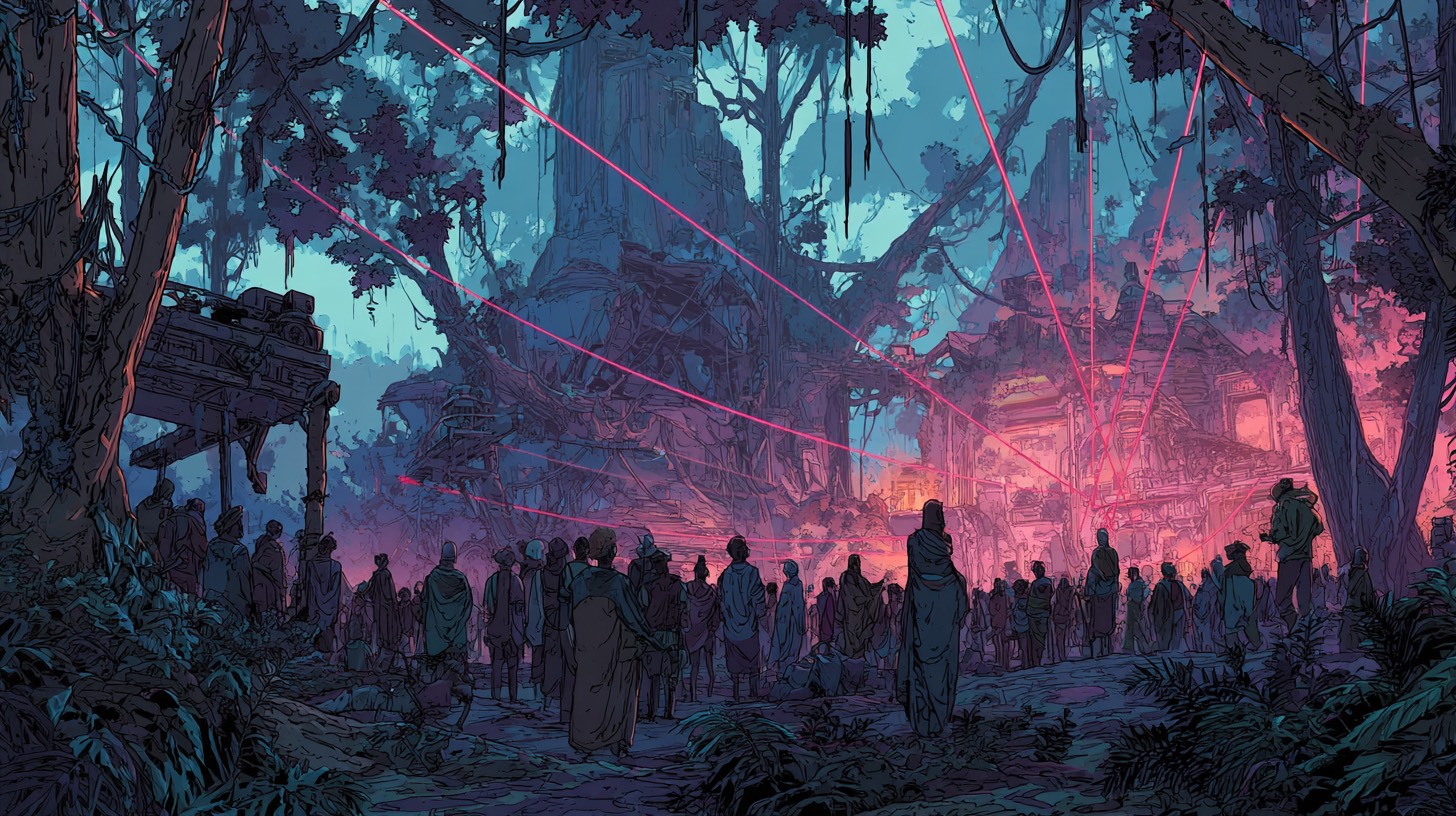
For most of them, it was about seeing the Eiffel Tower, hitting clubs, getting drunk. Normal teenager stuff.
For me, it was escape. Distance from my parents, from Greece, from the feeling that I was suffocating in a life that wasn't mine.
The plan was simple: meet my friend Adonis and his crew below the Eiffel Tower. They were driving from London through the newly opened Chunnel in his dad's BMW M3 convertible. I was flying in from Athens.
Simple plan. Terrible execution.
Because when you tell teenagers to "meet below the Eiffel Tower," you forget that the Eiffel Tower is fucking massive and there's a whole park around it and "below" could mean anywhere.
I waited for three hours.
I sat on a bench, pretending to read Le Monde—trying to look sophisticated, trying to practice my French—when I felt someone watching me.
I looked up.
Blue eyes. Blond hair under a brown beret. German accent asking if I had a light.
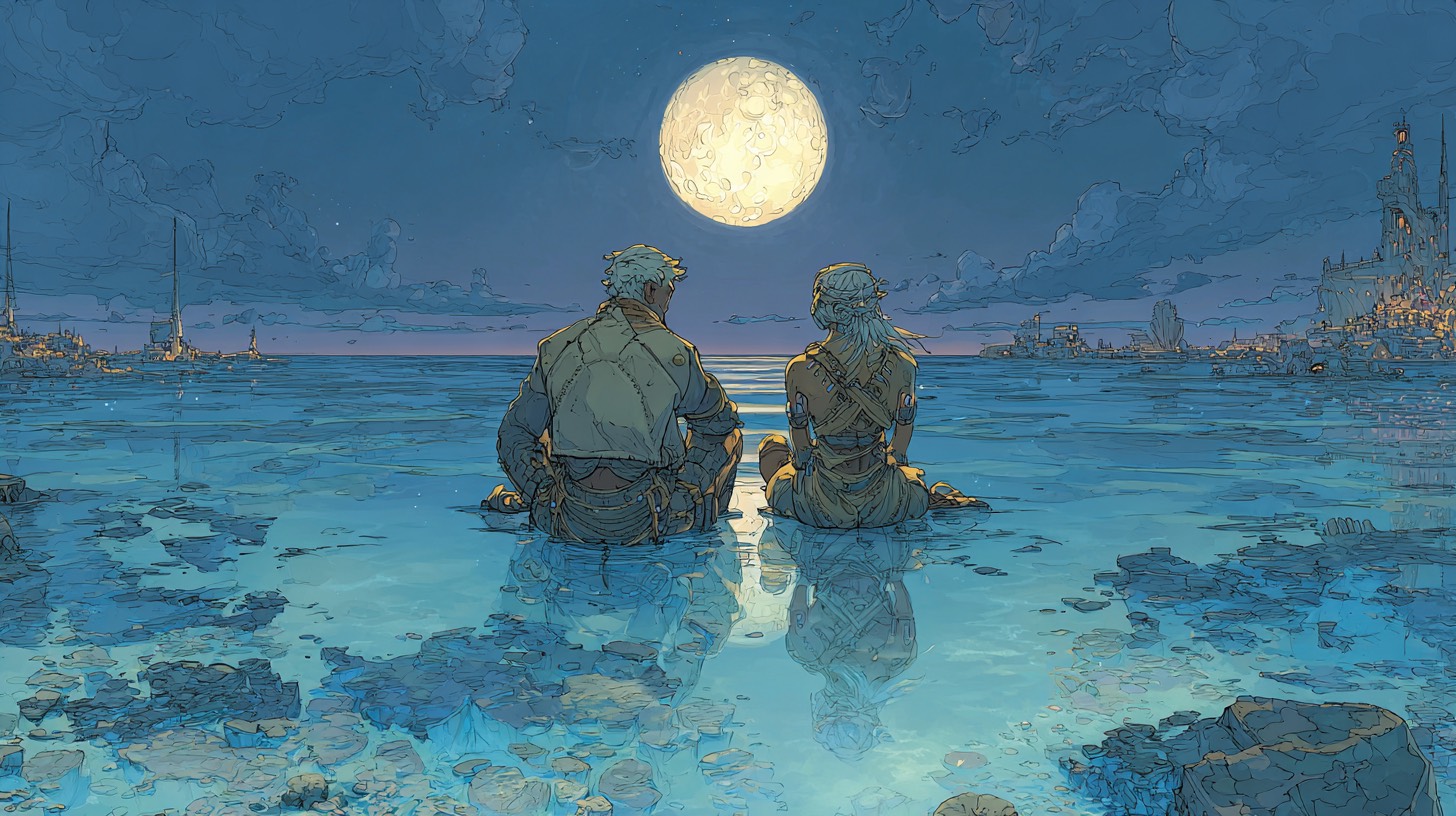
Her name was Atalanti.
She was sixteen. Interrailing through Europe with two friends. We started talking—that easy conversation you have with fellow travelers, where you're both escaping something and looking for something and the normal rules don't apply.
Adonis showed up eventually. So did Atalanti's friends. And we all ended up spending the week together, wandering through Paris like characters in a movie neither of us had seen yet.
By the time I flew back to Greece, Atalanti and I had exchanged addresses.
Real addresses. Physical mail. Because this was 1995 and email wasn't really a thing yet.
We wrote letters.
Sitting here now, trying to explain this to Akiko—who's never lived in a world without instant communication—I realize how strange it was. How intimate.
You'd write a letter, pour your heart into it, send it off into the void. And then wait. Days. Weeks. Not knowing if it arrived, if it was received, what the response would be.
And then suddenly: your mailbox is full. An envelope with foreign stamps. Her handwriting. And you'd tear it open and read it three times, absorbing every word, imagining her voice saying them.
It was isolating and unifying at the same time.
We wrote for almost a year. She went to South Africa on a student exchange program. I stayed in Athens, counting down the days until graduation, planning my escape to America for college.
And then, in the spring of 1996, I invited her to visit me in Greece.
Looking back now, I can see I had no idea what I was doing.
I'd spent a year building this relationship in words. Letters full of ideas and feelings and the kind of deep philosophical questions seventeen-year-olds think are profound. But we'd only spent five days together in person.
And now she was coming to Greece. To stay with me. To meet my family.
Except I didn't let her meet my family.
I borrowed a friend's house outside Athens—a place on the coast, quiet, private—and told my parents I was going camping with friends.
I picked Atalanti up from the airport in my dad's car. We drove for hours, windows open, Greek summer heat pouring in, and I remember thinking: This is weird. She's real. She's here. But is she the person from the letters? Or is she someone else?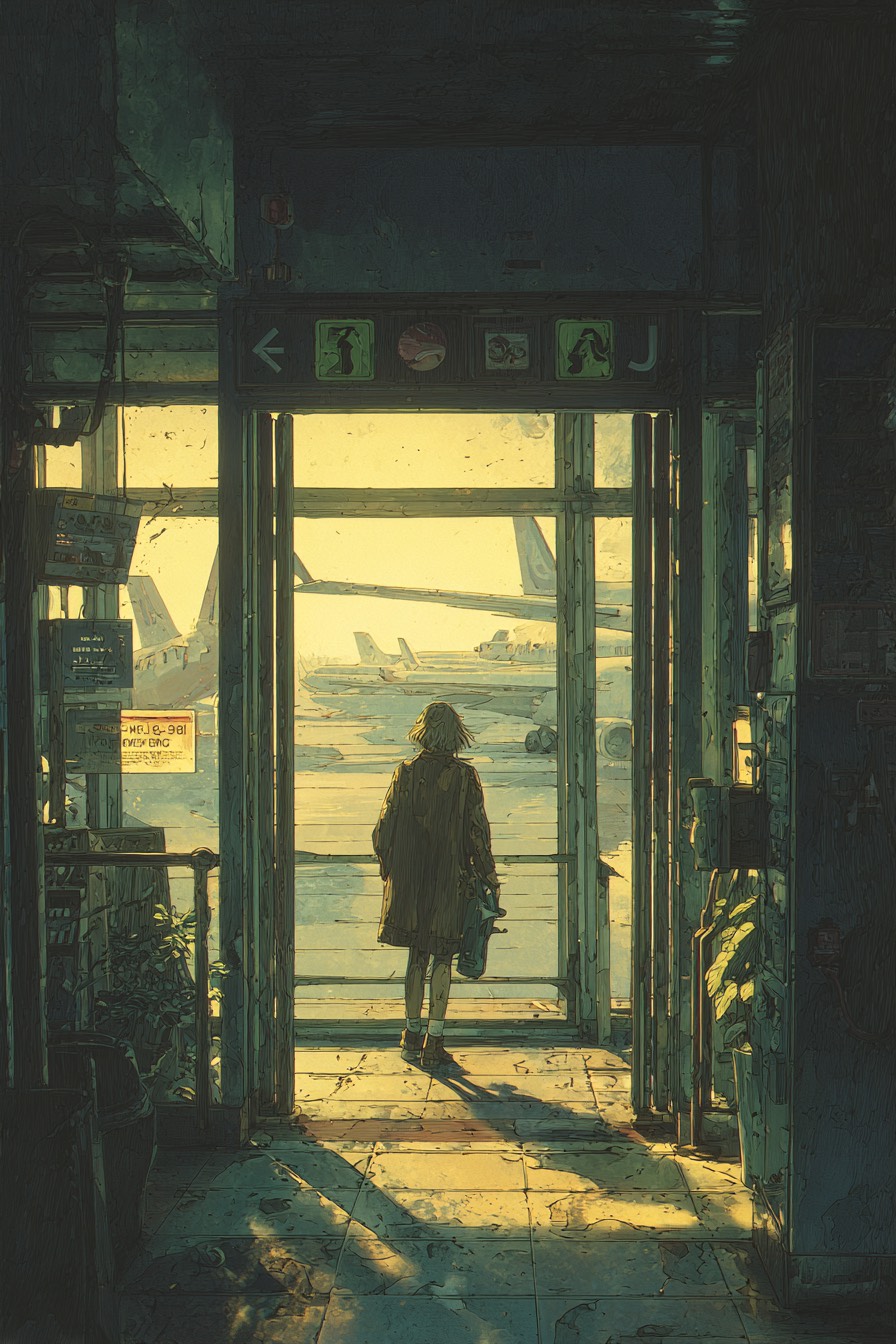
We arrived at the house in the evening. My friend Christos was there—one of the few people I'd told about Atalanti, one of the few people I trusted with what was about to happen.
Because I'd been planning this for weeks.
This wasn't just a reunion.
This was an experiment.
By the time I was seventeen, I'd been reading about altered states for years. Timothy Leary. Aldous Huxley. Terence McKenna. Books I'd ordered from America and had shipped to Athens because you couldn't find them in Greek bookstores.
And over the past few months, my friends and I had been experimenting.
LSD.
We'd done it maybe five, six times. Always in small groups. Always with intention. Not party drugs—ritual drugs. We'd prepare the space carefully, set clear intentions, make sure everyone felt safe. Trying to access something. Trying to see beyond the veil of ordinary reality.
And every time, something happened. Telepathy. Synchronicity. Moments where the boundaries between us dissolved and we could feel each other's thoughts. Or at least, that's what it felt like.
I wanted to know if it was real.
And I wanted to share it with Atalanti.
That night, after we'd settled in, Christos and I took acid. Atalanti didn't—she'd just flown halfway around the world and was understandably not ready to launch into another dimension.
But she watched.
And as the trip came on—that familiar tingling, reality starting to breathe, colors getting sharper—I started getting agitated.
I wanted Christos to feel it too. To connect with me the way we had before. But he kept giggling. Running away. Playing instead of diving deep.
And I got frustrated. Angry, even.
"Can't you see what's happening?" I said. "Can't you feel the power?"
He just laughed harder.
And then Atalanti touched my arm.
Everything stopped.
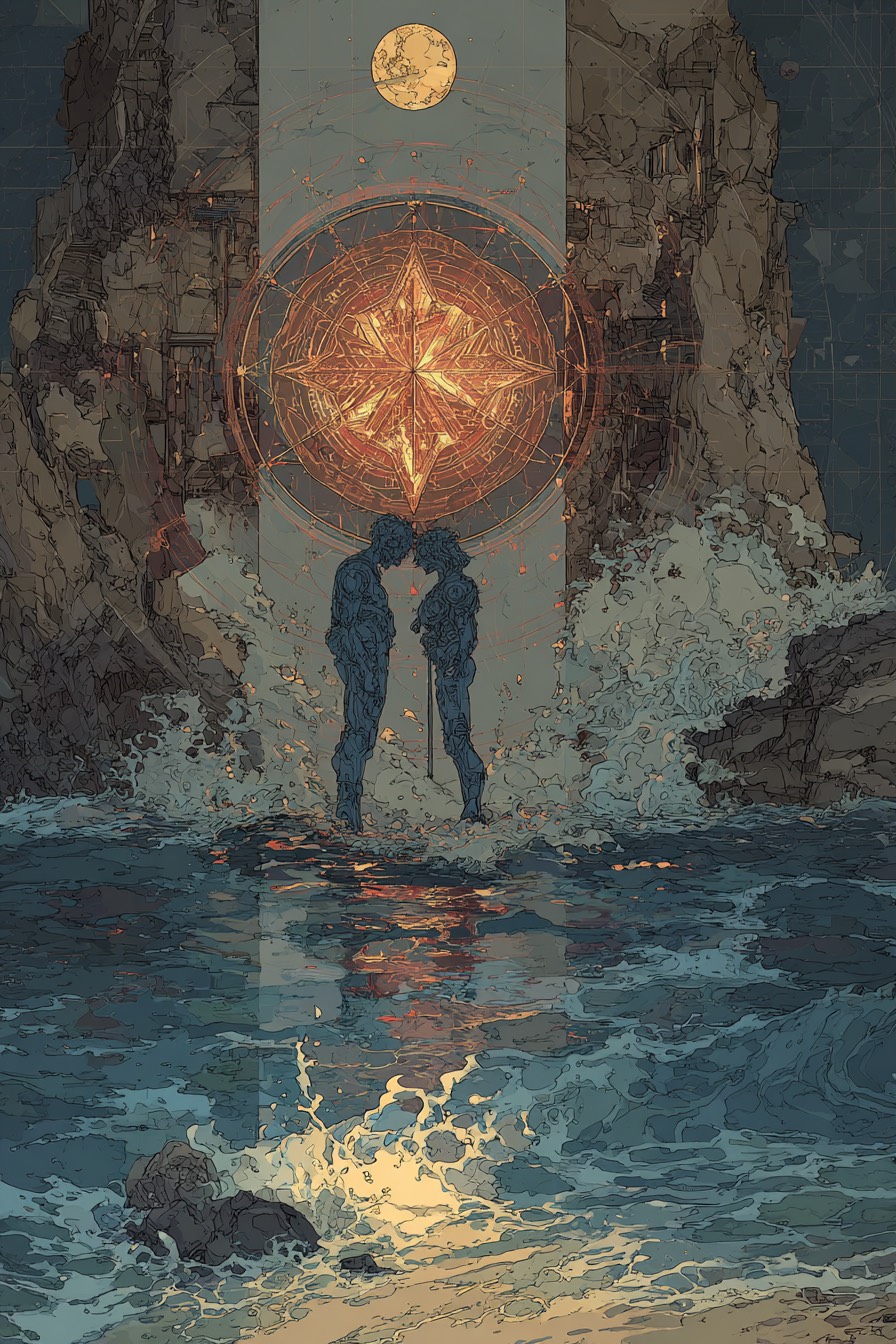
She led me out of the house, down to the beach. We sat in the sand, facing each other, foreheads resting on each other's shoulders. Hugging with one arm, bodies forming this closed circuit.
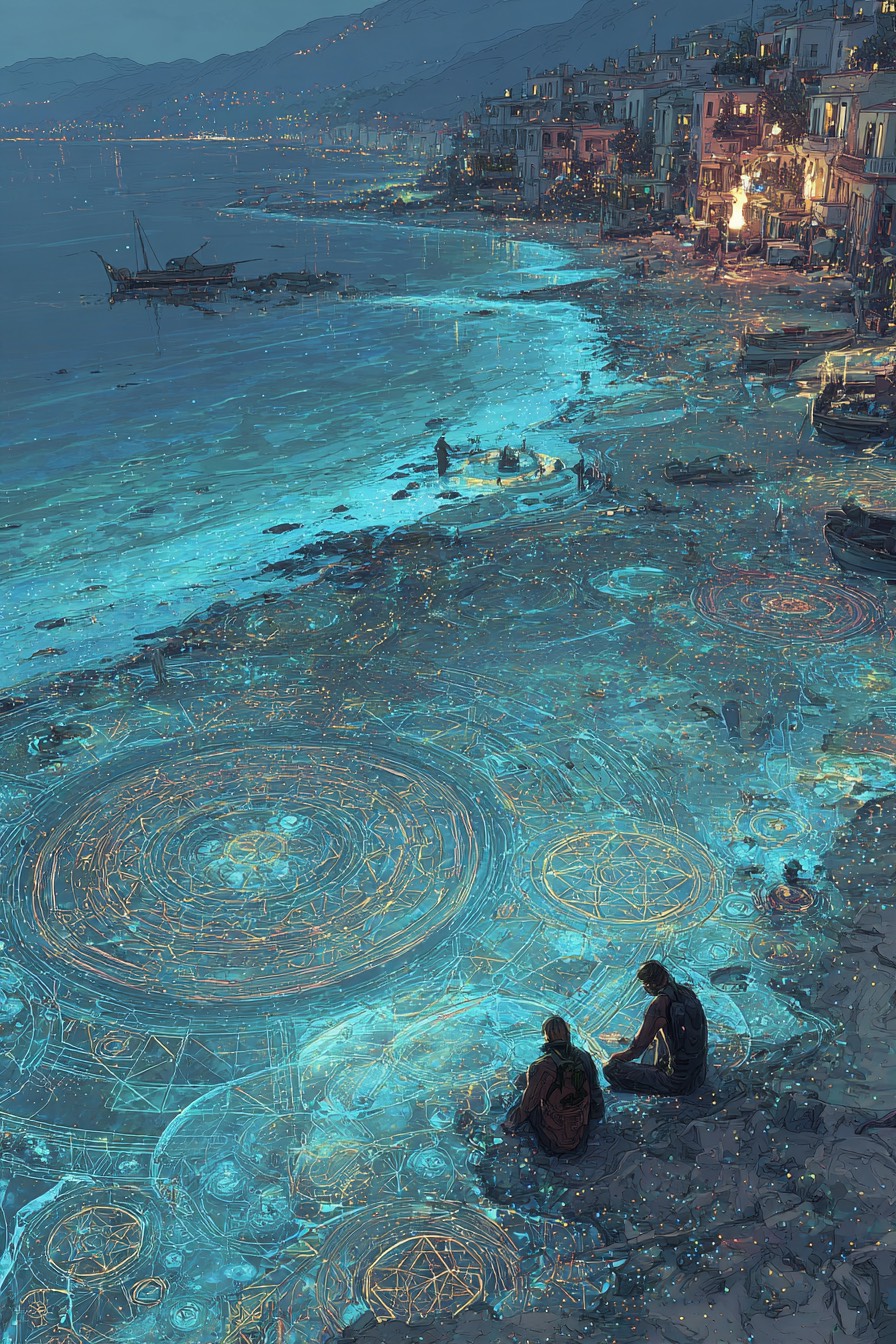
And she started talking.
But it wasn't her voice. Or it was her voice, but coming from somewhere else. Deeper. Older. Like she'd tapped into some feminine archetype, some mother goddess, and was channeling it.
And I could feel her words inside me. Not hearing them externally. Feeling them resonate in my chest, my head, my whole body.
Our breathing synchronized. Inhale. Exhale. Each breath deeper than the last.
And then—sitting here now, trying to describe this to Akiko, knowing it sounds insane—our bodies started to merge.
Not metaphorically. I could feel where our skin touched dissolving. Like the boundary between us was permeable. Like we were two water droplets that had touched and were now becoming one larger drop.
I could feel her from the inside. Her body as an extension of mine. Her breath as my breath. Her consciousness as my consciousness.
And in the space between us—or maybe it was inside both of us—a shape appeared.
Like a three-dimensional snowflake. One side yellow, one side red, twirling in the center to create the most perfect orange. Pulsating. Alive.
And Atalanti's voice—that ancient, timeless voice—said:
"Do you know what this is?"
I couldn't speak. Could barely think.
"What is it?" I managed.
And she said, so simply, so certainly:
"This is love."
In that moment, everything I'd ever experienced flashed through me. My whole life, fragmented and whole at the same time, mixing with hers. Two timelines overlapping, merging, becoming one story.
It could have lasted twenty minutes. It could have lasted hours. I have no idea.
What pulled me out was Christos touching me with a lit cigarette. Just the tip, barely burning. Enough to break the trance.
I looked around.
We were sitting in water. The tide had come in. We were submerged up to our waists.
I hadn't noticed. At all.
The moon was above us, full and bright, pulling the Mediterranean in ways I didn't know it could be pulled.
Atalanti's face was calm. Serene. Like she'd just returned from somewhere far away and was perfectly at peace with whatever she'd seen.
I was terrified.
Not of the experience itself. That had been beautiful. Transcendent. The most profound thing I'd ever felt.
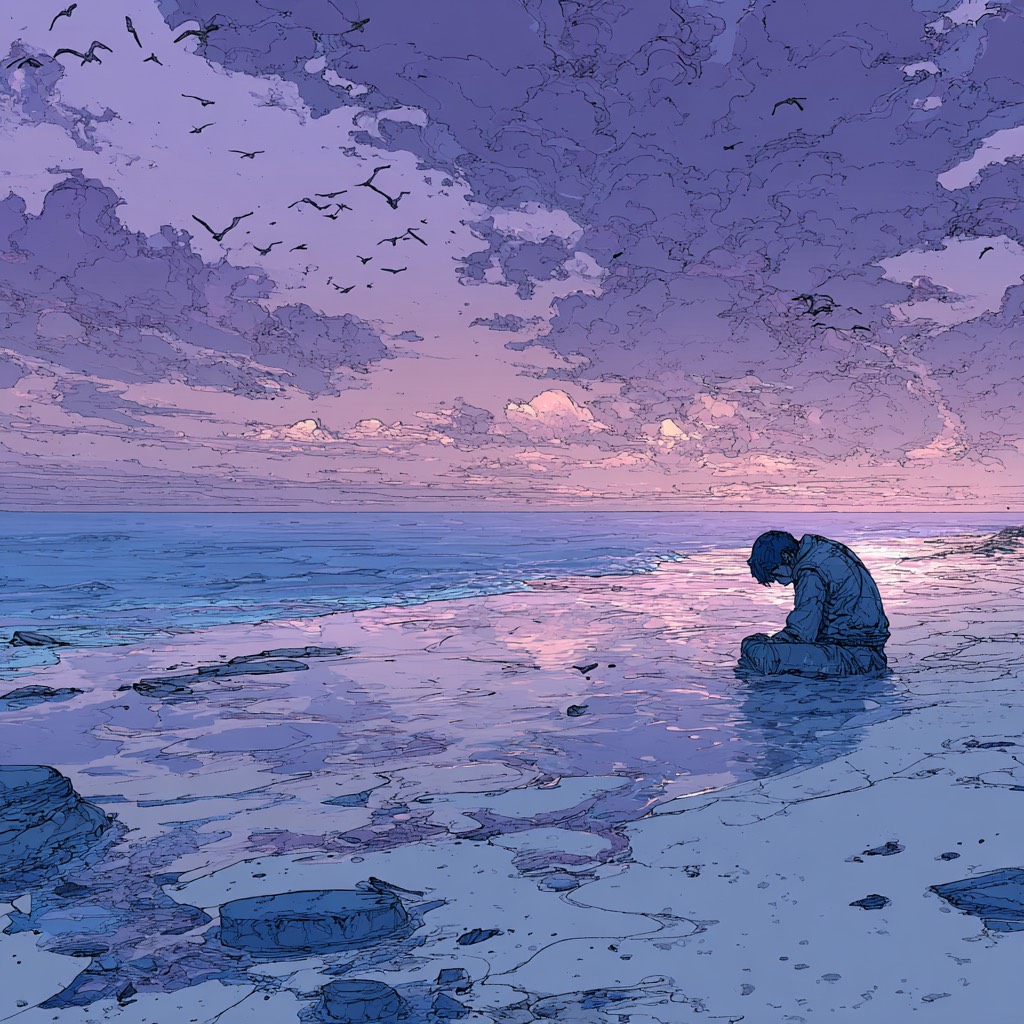
I was terrified that it wasn't real.
That it was just a hallucination. My brain playing tricks. Chemicals firing in patterns that created the illusion of meaning where there was none.
I avoided Atalanti the next morning. Made excuses. Stayed in another room. Convinced myself she'd think I was crazy.
But at lunch, she found me.
"We need to talk," she said.
"About what?"
"About last night."
My stomach dropped. "What about it?"
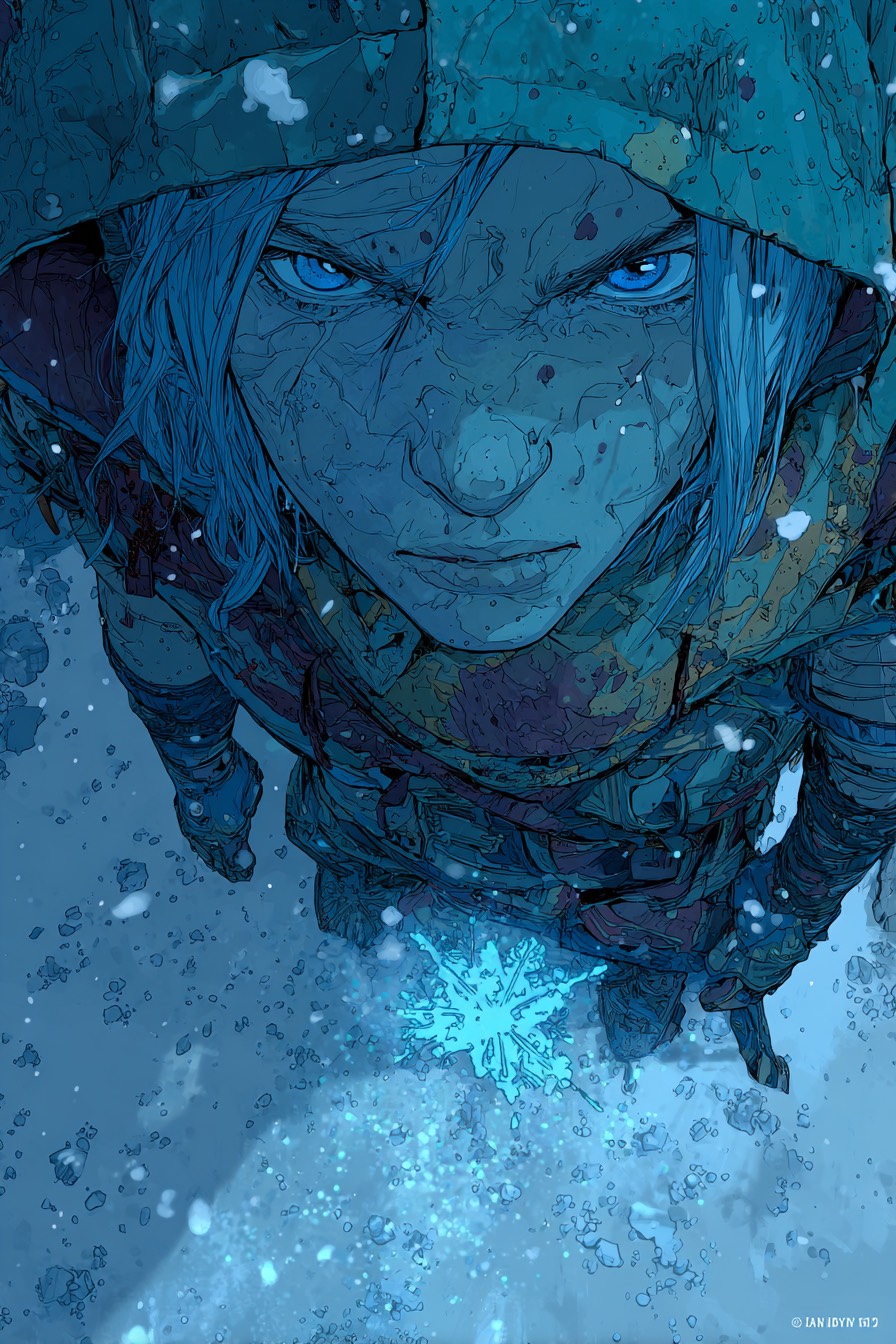
She looked at me with those steady blue eyes. And she recounted the entire experience. Beat for beat. Detail for detail. Exactly as I remembered it.
The snowflake. The colors. The breathing. The feeling of merging. Everything.
She'd seen it too.
She'd felt it too.
It was real.
Sitting here now with Akiko, six years later, after everything that's happened—after more LSD, after DMT, after ayahuasca in Peru, after all of it—I can trace everything back to that night.
Because that's when I learned the fundamental truth that would guide the rest of my life:
Consciousness is not confined to individual brains.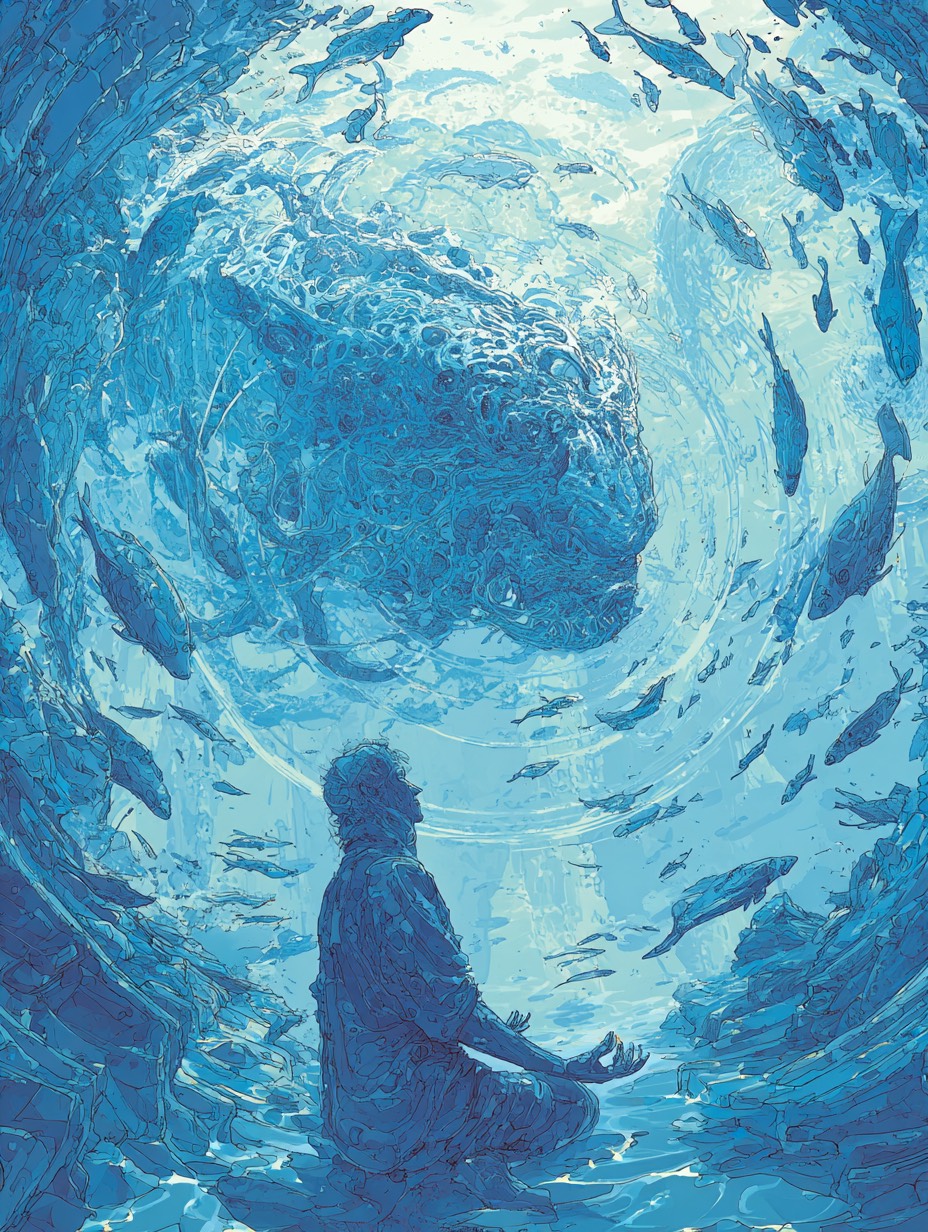
It's shared. Collective. Interconnected. Like water in an ocean—you can draw boundaries around a wave and call it separate, but it's still part of the whole.
And altered states—whether through meditation or dance or psychedelics—don't create something new. They dissolve the illusion of separation and let you experience what's always been there.
Unity.
Atalanti and I tried to recreate it after that. We'd sit on the beach, breathing together, trying to merge again. Sometimes it worked, a little. But never as powerfully as that first time.
Eventually she went back to Germany. I went to America for college. We wrote letters for another year and then drifted apart, the way teenage relationships do.
But what she gave me—what that night gave me—never left.
It became the foundation. The proof that I wasn't crazy. That the material world isn't all there is. That beneath the surface of ordinary reality, there's something deeper, stranger, more beautiful.
And everything after—moving to New Orleans, studying philosophy, meeting Michael at Solstice Grove, launching into the Odyssey—was just following that thread.
Trying to understand what I'd glimpsed that night on the beach in Greece.
Trying to access it again. Trying to live from it.
Trying to help others find it too.
But there's another part of that story. The part that came after. The part that sealed my fate in Greece.
A few months after Atalanti left, I was back in Athens. Senior year. Applying to colleges in America.
My friends and I were still curious about altered states. We'd heard about Amsterdam, about space cakes. It seemed gentler than LSD. More approachable.
And one night, I offered to make some.
I found a recipe online. Ground up enough hash to make it work. Spent an afternoon carefully mixing it into brownies.
I told everyone what they were. "These have cannabis in them. It's going to be intense. Don't eat them unless you're ready."
Everyone said they were ready.
Looking back now, none of us had any idea what we were getting into. For most of them, it was their first time trying anything like this. And edibles—space cakes—they hit different than smoking. Slower. Heavier. Harder to control.
We ate them together. Waited. Laughed nervously.
And then, about an hour in, it hit. Hard.
For me, it was manageable. I'd done LSD enough times that I could navigate the intensity. I knew how to breathe through it, how to let go rather than fight.
But for my friends—kids who'd maybe smoked weed once or twice, who'd never really been high high—it was overwhelming.
Paranoia. Panic. That awful cannabis spiral where your thoughts loop and you're convinced something terrible is happening.
One friend thought his heart was going to explode. Another was convinced he was dying. A third just sat in the corner, too terrified to speak.
I tried to calm everyone down. "You're okay. It's just the weed. You'll be fine in a few hours. Nobody's dying."
But when you're that far gone, words don't help. They were just... lost.
The next day, I got the calls.
Parents had found out. And my friends—scared, probably still shaken—told their parents they hadn't known what was in the brownies. That I'd given them to everyone without saying what they were.
It wasn't true. But I get why they said it.
They were seventeen. Their parents were furious. And it's easier to say "I didn't know" than "I chose to eat hash brownies and couldn't handle it."
They weren't trying to destroy me. They were just trying to protect themselves.
Sitting here with Akiko, I can see her frowning.
"But you told them," she says. "They knew."
"Yeah. But they were kids. We all were. And they panicked. I don't blame them for it anymore. It was too intense for a first experience. I should have given them way less. Or not done it at all."
"Still. You took the fall."
"I did. And honestly? It was what needed to happen."
"What do you mean?"
"I mean... I'd already been feeling like I didn't belong in Greece. Like I was suffocating there. But I didn't have the courage to really leave. This gave me the push I needed."
After that, things changed. Not dramatically. But subtly.
Some parents didn't want their kids hanging out with me anymore. A few friends kept their distance. Nothing hostile—just... awkward. Like I'd become the kid who couldn't be trusted.
And it confirmed what I'd already been feeling: I was different. I wanted different things. I asked different questions. And Greek society—conservative, concerned with appearances, protective of its children—wasn't going to let me explore those questions.
I needed to leave.
Not because anyone forced me out. But because that experience showed me I'd never fit the mold they wanted me to fit.
And instead of resenting it, I turned it into fuel.
"So you're saying they actually helped you," Akiko says.
"Yeah. I mean, it sucked at the time. I felt misunderstood. Like nobody got what I was trying to do. But it made leaving easier. It gave me permission to walk away without guilt."
"Lemons into lemonade."
"Exactly. If I'd still felt connected to that world, if I'd still had that friend group, maybe I would have stayed. Gone to university in Athens. Lived the safe life my parents wanted."
"But you didn't."
"But I didn't. I applied to Tulane. Got accepted. Left for New Orleans. And everything that happened after—all of it—started with that choice."
She nods, types for a moment. Then stops.
"Do you still talk to any of them?"
"No. We drifted apart. But I don't have any hard feelings. We were all just kids trying to figure shit out. They made the choice that felt safe. I made the choice that felt true. And that's okay."
Akiko stops typing, looks up.
"That's intense for a seventeen-year-old," she says.
"Yeah. It fucked me up in the best possible way."
"Did it scare you?"
"Terrified me. Still does, kind of. Because once you've seen behind the veil, you can't unsee it. And you spend the rest of your life trying to integrate it. Trying to function in the default world while knowing it's not the whole story."
"But you wouldn't take it back."
"Not for anything."
Outside the window, Brooklyn hums. But in here, we're building the story. Excavating the moments that created the person sitting in this chair, dictating his life to a stranger who's become a friend.
Paris was the door opening.
Athens was the setup.
But that beach in Greece with Atalanti—that was the first time I walked through the door. The first time I touched something real.
And once you touch it, you can't let go.
You chase it. Across continents. Across psychedelic experiences. Across relationships and heartbreaks and synchronicities and all the beautiful chaos of being alive.
You chase it because you know it's there.
And that knowledge changes everything.
Akiko closes her laptop.
"Next chapter is Cassie, right? The heartbreak?"
"Yeah. That's the wound that sent me on the journey."
"From Paris to heartbreak to the Odyssey. That's the arc."
"That's the arc."
I sit in the quiet for a while after she leaves.
Thinking about Atalanti. About that night. About being seventeen and having the boundaries dissolve and thinking: This is what they've been hiding from us. This is what religion used to point toward before it got institutionalized. This is why shamans exist. This is why people dance. This is what it's all about.
And knowing—even then, even at seventeen—that I'd spend the rest of my life trying to get back there.
Not to that specific experience. But to that state. That openness. That dissolution of boundaries.
That's what the journey was for.
That's what all of this is for.
Finding your way back to unity while still being able to function as an individual.
That's the practice.
That's the path.
And it all started in Paris, with a girl under the Eiffel Tower asking if I had a light.
I did.
And she showed me the fire.